— amazon · Kitchen
Coffee Grinders Burr Guide: Find Your Perfect Grind
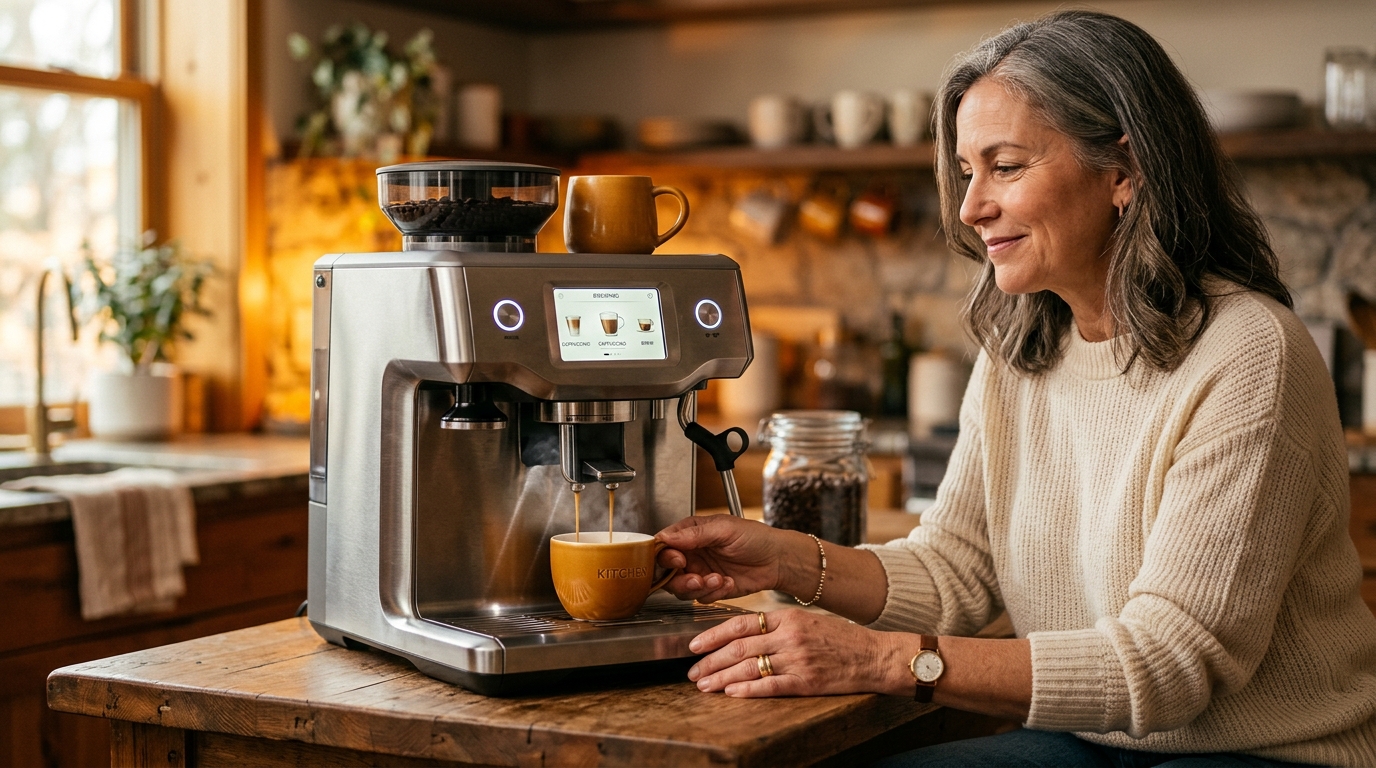
Compare coffee grinders burr styles, features, and top picks to choose a consistent grinder for better espresso, drip coffee, and French press at home.
Great coffee starts long before water reaches the grounds. While fresh beans matter, the grinder is often the single biggest upgrade for improving flavor, aroma, and consistency at home. Coffee grinders burr models crush beans between precisely spaced burrs instead of chopping them unevenly like blade grinders. That controlled process creates more uniform particles, helping you avoid muddy French press cups, sour espresso shots, and weak drip coffee. Whether you make a quick weekday pour-over or dial in espresso on a weekend, choosing the right burr grinder can make every bag of coffee taste closer to its potential. This guide explains conical versus flat burrs, manual versus electric designs, grind settings, cleaning needs, and worthwhile Amazon options for different budgets. As an Amazon Associate, we may earn from qualifying purchases, at no extra cost to you.
Why Burr Coffee Grinders Make Better Coffee
A burr coffee grinder uses two abrasive surfaces, called burrs, to mill coffee beans into particles of a controlled size. One burr typically remains fixed while the other rotates, and the gap between them determines the grind setting. A smaller gap produces fine coffee for espresso, while a wider gap creates coarse grounds for French press or cold brew.
Uniformity is the major advantage. Blade grinders use spinning blades that randomly smash beans, leaving a mix of powdery fines and oversized chunks. During brewing, the powder extracts too quickly and tastes bitter, while larger pieces under-extract and taste sour or thin. Burr grinding reduces that inconsistency, making recipes easier to repeat and flavors more balanced.
Most quality coffee grinders burr designs also provide numbered or stepped adjustments. This lets you return to a preferred setting after switching brew methods. For example, you can use a medium-fine setting for a cone dripper, move coarser for a French press, then return without guessing. It is a practical feature for households that brew more than one style of coffee.
Look beyond the number of settings alone. The useful range, adjustment precision, motor quality, retention, static control, and ease of cleaning all affect daily ownership. A grinder with 40 settings is not automatically better than one with 20; what matters is whether its settings fit the coffee maker you actually use.
Conical Burr vs. Flat Burr: What Is the Difference?
Conical burrs have a cone-shaped inner burr that sits inside a ring-shaped outer burr. They are common in home grinders because they are compact, relatively quiet, and effective across a wide range of brew styles. Many conical burr grinder models create a slightly broader particle distribution, which can produce a fuller-bodied, forgiving cup. They are a popular choice for drip coffee, pour-over, French press, and entry-level espresso.
Flat burrs use two parallel, ring-shaped discs. Beans pass between the discs and are ground as they travel outward. Flat burr grinders are often valued for clarity and precision, especially when dialing in espresso. They can produce a more uniform grind at certain settings, although they may be louder, larger, and more expensive than comparable conical models.
Neither burr shape is universally superior. Choose conical burrs if you want versatile performance, simpler operation, and strong value. Consider flat burrs if you prioritize flavor separation, use light-roast coffee, or want tighter control over espresso. Burr material matters too: stainless steel burrs are sharp, durable, and common; ceramic burrs stay cool and resist corrosion but can be more brittle if a stone enters the hopper.
For most kitchen counters, a capable conical model is the sensible starting point. The OXO Brew Conical Burr is a convenient option for everyday batch brewing, while enthusiasts who prefer single-dose grinding may appreciate the different workflow offered by premium flat-burr machines.
How to Choose the Best Burr Grinder for Your Brew Method
Start with your preferred coffee maker. A drip machine, French press, AeroPress, or pour-over brewer needs a grinder with dependable medium to coarse settings. Espresso demands much finer adjustment because tiny changes in particle size can dramatically affect shot time and taste. If espresso is your main goal, prioritize a dedicated espresso grinder or an all-purpose model with fine, closely spaced settings.
For drip coffee and pour-over: Choose a grinder with a medium range, a grounds bin that pours cleanly, and a timer or dose control if you brew several cups every morning. The OXO Brew Conical Burr offers straightforward controls that suit this routine.
For espresso: Seek low retention, stepless or micro-adjustable controls, and a portafilter-friendly design. The Baratza Encore ESP is designed to bridge the gap between approachable home grinding and the finer adjustments espresso requires. It can also handle filter coffee, making it a useful choice for households that switch methods.
For French press and cold brew: Focus on a consistent coarse setting and a grinder with enough capacity for larger doses. Coarse grounds should look even and distinct, not dusty. A large hopper is convenient, but buying smaller bags of beans and keeping them sealed is often better for freshness.
For quiet, manual brewing: A hand grinder can be excellent for one or two cups. Manual burr grinders are portable, usually quieter, and often provide impressive consistency for the price. They do require effort, especially at espresso-fine settings.
Top Coffee Grinders Burr Options for Home Kitchens
Baratza Encore ESP: This electric conical burr grinder is a strong all-round recommendation for people who want both espresso capability and filter-coffee flexibility. Its adjustments are organized to make finer espresso tuning more accessible while retaining useful settings for drip, pour-over, and French press. The Baratza Encore ESP is especially appealing to new espresso owners who do not want separate grinders for every brew method.
OXO Brew Conical Burr: For dependable daily drip coffee, this model emphasizes convenience. It has a hopper, a grounds container, and timer-based operation that can simplify busy mornings. The OXO Brew Conical Burr is best for shoppers who value consistency and a user-friendly experience over ultra-fine espresso adjustment.
Fellow Ode Gen 2: This flat-burr, single-dose grinder is geared toward filter-coffee fans. Its low-retention workflow can be appealing when you frequently change beans, and its modern countertop design suits organized kitchen setups. The Fellow Ode Gen 2 is primarily for pour-over, drip, and other filter methods rather than traditional espresso.
Before buying, compare current pricing, included accessories, voltage compatibility, dimensions, and reviews on the product listing. Grinder availability and specifications can change. If a model fits your brew method and budget, check the price and confirm that its grind range matches your equipment. Avoid paying for espresso-focused features if you only brew French press, but do not choose a coarse-only grinder if you plan to buy an espresso machine soon.
Grind Settings, Freshness, and Maintenance Tips
A great grinder still needs a basic routine. Grind immediately before brewing whenever possible. Whole beans retain aromatic compounds longer than pre-ground coffee, while ground coffee loses fragrance and flavor rapidly after exposure to air. Store beans in an airtight container away from heat, moisture, and direct sunlight; do not keep them in the refrigerator, where condensation and food odors can be problems.
Use grind size as a flavor adjustment. If coffee tastes sour, sharp, or underdeveloped, try grinding a little finer or brewing longer. If it tastes bitter, dry, or harsh, try a slightly coarser setting or shorten the brew. Change only one variable at a time, then taste again. For espresso, make small adjustments because even one click can affect flow rate.
Clean the hopper and grounds bin regularly, and brush loose coffee from the burr chamber every one to two weeks for frequent use. Old oils and trapped grounds can become stale and interfere with consistency. Follow the manufacturer instructions before removing burrs, and never wash electric grinder components unless the manual specifically says they are washable. A grinder-cleaning tablet can help remove coffee oils, but it does not replace brushing out compacted grounds.
Finally, do not overload the hopper with beans if you enjoy trying different roasts. Single-dosing only the beans needed for each brew reduces waste and makes it easier to switch coffees. This simple habit can improve freshness as much as upgrading your equipment.
FAQ
- Are burr grinders really better than blade grinders?
- Yes. Burr grinders generally produce more even coffee particles, which promotes more balanced extraction and repeatable flavor. Blade grinders are inexpensive, but they chop beans inconsistently and make it difficult to control grind size for different brewing methods.
- What grind setting should I use for drip coffee?
- Start at a medium grind, similar to coarse sand. If the coffee tastes weak or sour, move slightly finer. If it tastes bitter or drains too slowly in a manual brewer, move slightly coarser. Your filter type, coffee dose, and brewer can all affect the ideal setting.
- Can the Baratza Encore ESP grind for French press?
- Yes. The Baratza Encore ESP has settings suitable for coarse brewing methods such as French press as well as finer ranges for espresso. It is a practical option for people who want one grinder for several brew styles.
- How often should I clean a burr coffee grinder?
- Brush out loose grounds every one to two weeks if you use the grinder daily, and perform a more thorough burr-chamber cleaning about monthly. Clean more often when switching between oily dark roasts and lighter coffees, or whenever you notice stale flavors, excess static, or inconsistent dosing.
Conclusion
The best coffee grinders burr option is the one that matches your brewing habits, not necessarily the one with the largest hopper or the most settings. A reliable conical burr grinder is ideal for many homes because it handles drip coffee, pour-over, and French press with consistent results. If espresso is a priority, invest in finer adjustment control so you can dial in shots instead of fighting sour or bitter flavors. Filter-focused coffee drinkers may prefer the clarity and low-retention workflow of a flat-burr model such as the Fellow Ode Gen 2. Whichever style you choose, grind fresh beans, keep the burr chamber clean, and make small adjustments based on taste. Ready to improve your morning coffee? Compare the Baratza Encore ESP, OXO Brew Conical Burr, and Fellow Ode Gen 2 on Amazon, read current buyer feedback, and check the price before choosing the model that fits your kitchen and brew routine.
— Enjoyed this? Pass it on
— Want to build your own?
Publish articles like this in 90 seconds.
The whole terminal — AI writer, PA-API sync, refresh radar, auto-tweets — free for the first 3 articles.
Try for free