— amazon · Kitchen
Coffee Grinders Burr Guide: Find Your Best Home Grinder
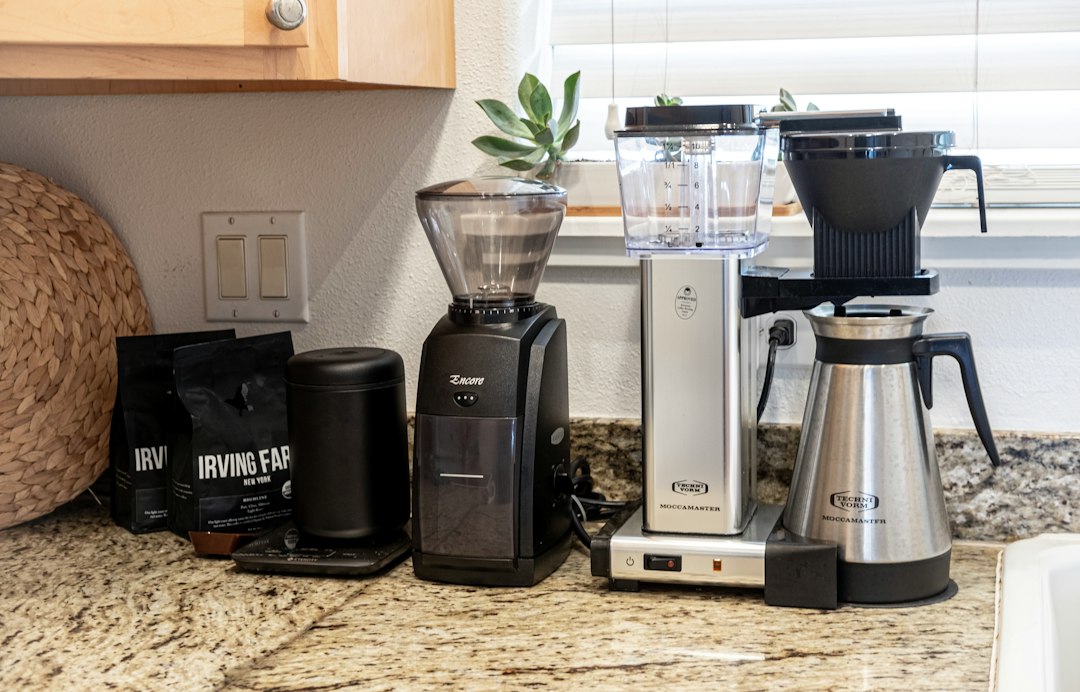
Explore coffee grinders burr options, compare conical and flat burrs, and choose the right grinder for fresher espresso, drip coffee, and more at home.
Great coffee begins before hot water ever reaches the grounds. The moment beans are crushed, aromatic oils and flavor compounds begin to fade, which is why a quality grinder can make a bigger difference than buying a more expensive coffee maker. This coffee grinders burr guide explains what separates burr grinding from blade chopping and how to choose a model that fits your daily routine. Whether you brew bold espresso, balanced pour-over, convenient drip coffee, or a coarse French press, uniform grounds help water extract flavor more evenly. The result is a cup that tastes sweeter, clearer, and more consistent. From compact manual models to feature-rich electric machines, the right burr grinder can make fresh coffee easier to achieve at home. Use this guide to understand burr types, grind adjustment, capacity, cleaning needs, and smart shopping priorities before selecting a grinder.
Why Coffee Grinders Burr Systems Improve Flavor
Burr grinders work by crushing beans between two abrasive surfaces rather than slicing them with rapidly spinning blades. This creates particles that are much closer in size, giving your brewer a more predictable extraction. When grounds are uneven, tiny particles can over-extract and taste bitter while large pieces under-extract and taste sour or weak. A burr grinder reduces that gap, helping you brew coffee with better body, balance, and aroma.
For most home brewers, this consistency is the main reason to upgrade. Blade grinders may be inexpensive and compact, but they create a mix of powder and chunks. They also heat beans quickly when run for too long. Coffee grinders burr designs give you more control over the final cup, especially when changing between brewing methods. Freshly grinding whole beans immediately before brewing also preserves more fragrance than purchasing pre-ground coffee.
Look for a grinder that produces repeatable results rather than chasing the highest number of settings. A reliable adjustment mechanism, steady motor, and well-made burrs matter more than a long feature list you will never use.
conical burr grinder vs. flat burr grinder
The two most common styles are conical and flat burrs. A conical burr grinder uses a cone-shaped inner burr that fits inside an outer ring. This design is popular for home use because it often runs at a lower speed, produces less heat, and handles a wide range of brew styles well. Many coffee drinkers appreciate its relatively quiet operation and forgiving workflow.
A flat burr grinder uses two parallel discs to crush beans. Flat burrs can deliver highly uniform particle sizes, a quality valued by espresso enthusiasts and people who want exceptional precision. However, flat-burr machines may cost more, create more noise, and require careful dialing-in when you switch beans or recipes.
Neither style is automatically best for everyone. Choose conical burrs if you want versatility, simple daily use, and a broad range of grind sizes. Consider flat burrs if espresso is your main focus and you enjoy making small recipe adjustments. In either case, durable stainless steel burrs are a practical choice for most kitchens, while ceramic burrs can be long-lasting and are often found in manual grinders.
Match grind size settings to Your Brewing Method
The right grinder should cover the range your preferred brewer needs. Fine grounds are typically used for espresso, medium grounds suit automatic drip machines, and coarser grounds work best for French press or cold brew. Good grind size settings let you make these changes without guessing, so you can correct a coffee that tastes too bitter, too sour, too thin, or too slow to brew.
- Espresso: Choose a grinder with small, precise adjustments near the fine end of the range.
- Pour-over: Prioritize even medium-fine to medium settings for clear, balanced cups.
- Drip coffee: A consistent medium grind is usually the everyday sweet spot.
- French press: Look for reliable coarse settings with minimal powdery fines.
- Cold brew: Use a very coarse setting to simplify filtering and reduce sediment.
Stepped grinders move through predefined clicks, making settings easy to repeat. Stepless grinders offer nearly continuous adjustment and can be useful for espresso, but they may take more practice. If several people use your kitchen, a stepped model is often simpler because everyone can return to a familiar setting.
What to Look for in the Best Coffee Grinder
Start with your brewing habits rather than the most expensive model available. An espresso-focused household needs fine adjustment and low clumping, while a household that makes drip coffee every morning may value speed, low noise, and a larger hopper. Think about how many cups you brew, how often you switch beans, and how much counter space you can spare.
Important features include burr material, the number and usability of adjustments, hopper capacity, static control, grounds-bin design, and cleaning access. A removable upper burr makes routine maintenance far easier. If you measure coffee by weight, a dose cup or grounds container that fits neatly on a scale is useful. For people who prefer one fresh serving at a time, a single-dose grinder can reduce stale beans sitting in a hopper.
Manual grinders are excellent for travel, small kitchens, and occasional brewing. Electric machines are more convenient for daily use and larger batches. Before buying, read recent reviews, compare warranty terms, and check the price against features you will genuinely use. A dependable mid-range grinder is often a better long-term purchase than a cheap model that struggles to produce even grounds.
Cleaning, Storage, and Daily Burr Grinder Care
Keeping a burr grinder clean protects both flavor and performance. Coffee oils gradually coat the burrs and chute, while trapped grounds become stale and can make fresh coffee taste dull. For most users, brushing out loose grounds weekly is enough. A more thorough cleaning every few weeks is useful if you grind dark, oily beans or use the grinder multiple times each day.
Unplug an electric grinder before cleaning. Empty the hopper, remove beans, and use a soft brush to clear the burr chamber and exit chute according to the manufacturer instructions. Avoid washing metal burrs unless the manual specifically permits it; moisture can lead to corrosion. Grinder-cleaning tablets may help remove oils, but they should not replace brushing and regular inspection.
Store whole beans in an airtight container away from heat, sunlight, and moisture. Do not fill a hopper days in advance unless you use coffee quickly, since beans are better protected in sealed storage. With a clean grinder and fresh beans, even a simple brewer can make noticeably more enjoyable coffee.
Affiliate disclosure: As an Amazon Associate, this site may earn from qualifying purchases at no extra cost to you.
FAQ
- Are burr grinders really better than blade grinders?
- For most coffee drinkers, yes. Burr grinders create more uniform grounds, which improves extraction and makes flavor easier to control. Blade grinders can work for occasional use, but their uneven particles make it harder to brew consistent coffee, especially for espresso, pour-over, and French press.
- How many grind settings do I need?
- You need enough usable settings for your favorite brewing method. Drip and French press drinkers can do well with a moderate range. Espresso drinkers benefit from many fine adjustments because tiny changes in grind size can significantly affect shot time, flow, and flavor.
- Should I choose stainless steel burrs or ceramic burrs?
- Stainless steel burrs are common, durable, and effective for everyday electric grinders. Ceramic burrs retain sharpness well and are frequently used in hand grinders. The grinder's overall build quality, alignment, and adjustment system usually matter more than burr material alone.
- How often should I clean a burr coffee grinder?
- Brush out loose grounds about once a week if you brew daily, and deep-clean the burr chamber every few weeks. Clean more often when using oily dark roasts. Regular maintenance limits stale residue, reduces clogging, and helps preserve the grinder's consistency.
Conclusion
Choosing among coffee grinders burr options is ultimately about making your favorite brewing method easier and more rewarding. A dependable burr grinder delivers more even particles than a blade grinder, helping espresso taste richer, pour-over coffee taste cleaner, and French press coffee taste less muddy. Start by identifying the grind range you need, then compare burr type, adjustment control, capacity, noise level, and cleaning convenience. A conical model is a versatile choice for many homes, while a precise flat-burr design may appeal to dedicated espresso fans. Do not overlook practical details such as a removable burr, a low-static grounds bin, and a hopper size that matches your routine. Ready to improve your daily cup? Compare well-reviewed models, review the current features, and check the price on a grinder that suits your coffee habits. Fresh beans and a consistent grind are simple upgrades with delicious results.
— Enjoyed this? Pass it on
— Want to build your own?
Publish articles like this in 90 seconds.
The whole terminal — AI writer, PA-API sync, refresh radar, auto-tweets — free for the first 3 articles.
Try for free