— amazon · Kitchen
Best Coffee Burr Grinders: A Smarter Buying Guide
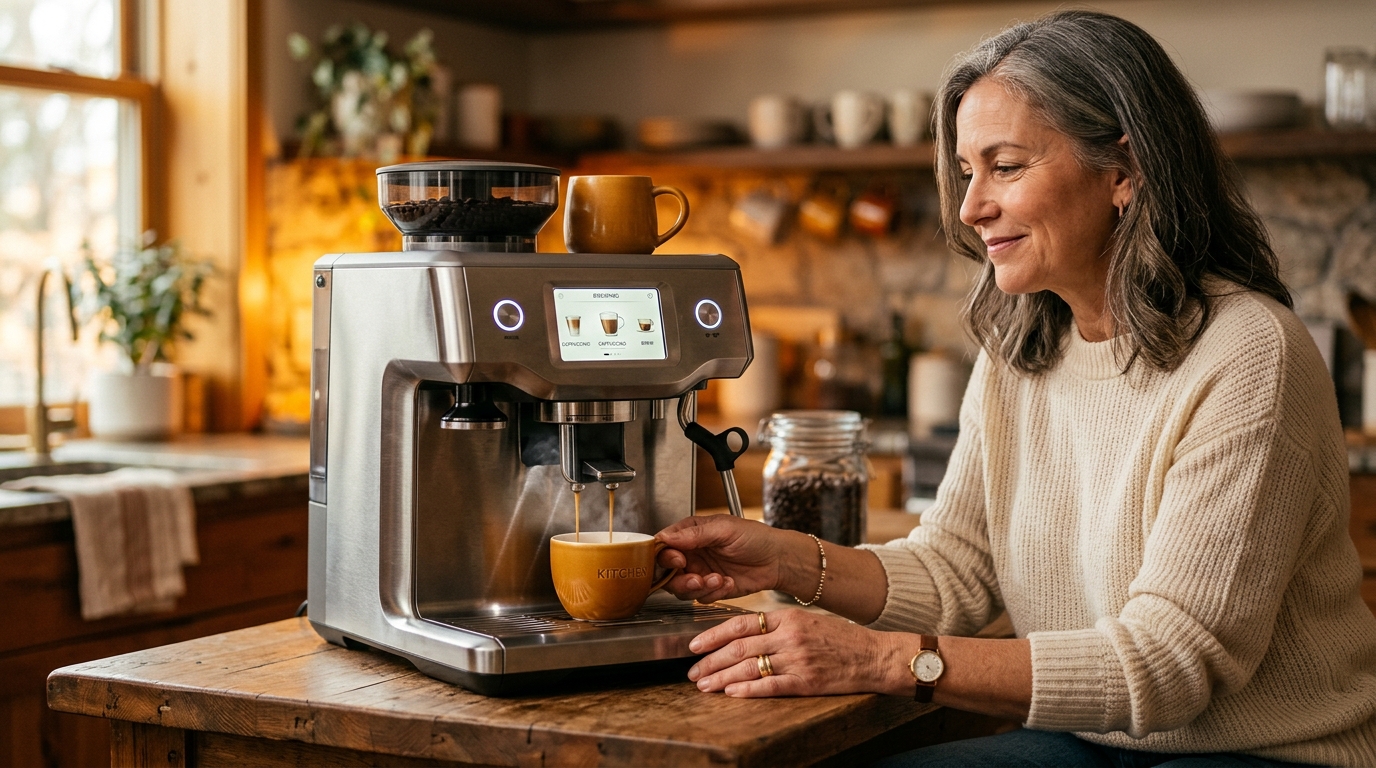
Find the best coffee burr grinders for fresher, more consistent coffee. Compare burr types, settings, capacity, and features for every home brewing style.
Great coffee begins before hot water ever touches the grounds. The moment whole beans are ground, aromatic oils and delicate flavors begin to fade, which is why a dependable burr grinder can make a more noticeable difference than many brewing upgrades. Coffee burr grinders create more uniform particles than blade models, helping water flow evenly through the grounds and producing a cleaner, sweeter, and more balanced cup. Whether you make espresso, pour-over coffee, French press, cold brew, or a simple drip pot, the right grinder gives you control over flavor and consistency. This guide explains the important differences between conical and flat burrs, manual and electric models, grind ranges, useful features, and maintenance needs. It also highlights what to consider before choosing a grinder through Amazon Associates links, so you can confidently invest in equipment that suits your beans, routine, budget, and favorite brewing method.
Why Coffee Burr Grinders Deliver Better Flavor
The key advantage of coffee burr grinders is particle consistency. A blade grinder chops beans unpredictably, leaving a mix of fine dust and oversized chunks. During brewing, the tiny particles can over-extract and taste bitter, while larger pieces under-extract and taste weak or sour. Burrs crush beans between two precisely shaped surfaces, creating a far narrower range of particle sizes.
That consistency matters in every brew method. Espresso needs very fine, even grounds to create resistance and balanced extraction. Pour-over brewing benefits from a controlled medium grind that lets water pass through at a steady rate. French press and cold brew usually call for coarser particles that are less likely to create excessive sediment. With a quality burr grinder, you can adjust the grind rather than changing your coffee dose or brew time to compensate for uneven grounds.
Fresh grinding also preserves fragrance. Grinding immediately before brewing helps retain the volatile compounds responsible for notes such as chocolate, citrus, nuts, fruit, and florals. For most home brewers, a burr grinder is the most practical first upgrade after buying quality whole beans.
conical burr grinder vs. flat burr grinder
A conical burr grinder uses a cone-shaped inner burr and a surrounding outer burr. Beans move downward through the burr set as they are crushed. Conical designs are popular for home kitchens because they are often compact, relatively quiet, and forgiving with different roast levels. They also tend to retain less coffee in the grinding chamber, which is helpful when switching between beans.
A flat burr grinder uses two parallel rings with sharp cutting edges. It can produce highly uniform grounds and is frequently favored by serious espresso enthusiasts and commercial coffee setups. Flat-burr machines may offer excellent clarity and repeatability, but they can be larger, louder, more expensive, and more sensitive to calibration.
Neither style automatically makes better coffee in every situation. Choose conical burrs if you value convenience, a smaller footprint, lower noise, and versatility for drip coffee or pour-over. Consider flat burrs when precision, repeatable espresso dialing, and a more refined workflow are your priorities. Burr quality, motor design, alignment, and grind adjustment system matter as much as burr shape.
How to Choose the Right Grinder for Your Brew Method
Start with the coffee you make most often. For espresso, look for a grinder with fine, repeatable adjustments. Stepped settings can work well, but stepless or micro-adjustable designs provide more precise control when a shot runs too quickly or slowly. If espresso is your main goal, prioritize a model marketed for espresso capability rather than assuming every burr grinder can grind finely enough.
For drip coffee, Chemex, V60, AeroPress, and French press, a broad range of clearly marked grind size settings is especially useful. Medium-fine settings work for many pour-over recipes, medium settings suit automatic drip brewers, and coarse settings are useful for immersion brewing. A grinder that changes settings smoothly makes experimenting much easier.
Also consider capacity and routine. A large hopper is convenient for households using one coffee every day. Single-dose designs are better for people who enjoy changing beans frequently and measuring each dose. Manual grinders offer portability and quiet operation, while electric models save time for multiple cups. Before purchasing, check the price, grinder dimensions, hopper capacity, cleaning instructions, and whether replacement burrs are available.
Useful Features Worth Paying For
The best features are the ones that solve a real problem in your routine. A timer can make weekday grinding more consistent, while a built-in scale can help users dose coffee precisely. Low-retention designs reduce stale grounds left inside the machine, which is valuable when switching from decaf to regular beans or trying a new roast. An anti-static grounds cup can also reduce messy coffee dust around the counter.
For beginners, easy-to-read grind markings and a removable hopper are practical advantages. For experienced brewers, look for fine adjustment control, sturdy burr carriers, and a grounds bin or portafilter holder that fits your setup. A grinder should feel stable during use and should not require complicated disassembly for routine cleaning.
Popular entry-level choices often include the Baratza Encore, which is widely known for filter coffee versatility, and the OXO Brew Conical Burr Coffee Grinder, which is designed for approachable everyday use. Features and pricing can change, so review the current product page, read recent customer feedback, and check the price before choosing. Amazon links in this article may earn a commission at no additional cost to you.
Cleaning, Calibration, and Long-Term Grinder Care
A burr grinder can perform well for years when it is cleaned regularly. Coffee oils and fine particles collect around burrs, chutes, and grounds bins. Over time, this buildup can make fresh coffee taste dull or rancid and may affect grind consistency. For typical home use, brush loose grounds from the burr chamber every week or two and perform a deeper cleaning about once a month.
Always unplug an electric grinder before removing the hopper or burrs. Use a soft brush, dry cloth, or vacuum designed for small appliances. Avoid washing burrs unless the manufacturer specifically says it is safe; moisture can lead to corrosion and can leave hidden water inside the grinder. Grinder-cleaning pellets can be useful for removing oils, but follow the product instructions and grind a small amount of coffee afterward to clear residue.
If your usual setting suddenly produces noticeably finer or coarser grounds, inspect the burrs and check the manual for calibration guidance. Burrs eventually wear down, especially in high-volume households. Replacing worn burrs can restore performance without replacing the entire machine. Good maintenance protects flavor, reduces waste, and keeps your coffee routine consistent.
FAQ
- Are coffee burr grinders really better than blade grinders?
- For most coffee drinkers, yes. Coffee burr grinders produce more even particles, which improves extraction and makes flavor easier to control. Blade grinders are inexpensive and compact, but their uneven results can create bitter, sour, or muddy coffee. A burr grinder is especially worthwhile for espresso, pour-over, and French press brewing.
- What grind setting should I use for espresso?
- Espresso usually requires a fine grind, but the exact setting depends on the coffee, basket, dose, machine, and humidity. Start near the espresso range recommended by your grinder manufacturer, then adjust in small increments. If the shot runs too fast, grind finer; if it runs too slowly or tastes harsh, grind slightly coarser.
- Can one conical burr grinder handle espresso and French press?
- Some models can, but not all of them offer enough precision for excellent espresso. A versatile conical burr grinder may cover a wide range from fine to coarse, while a dedicated espresso grinder offers tighter adjustment control. If you mostly brew French press, drip, or pour-over, broad grind size settings are generally more important than ultra-fine micro-adjustments.
- How often should I clean a burr coffee grinder?
- Brush out loose grounds every one to two weeks if you use the grinder daily. A deeper cleaning every month is a sensible routine for many households. Clean more often when using very oily dark-roast beans, changing coffees frequently, or noticing stale flavors, static buildup, or inconsistent grind output.
Conclusion
Choosing among coffee burr grinders is less about finding one universal winner and more about matching the grinder to your brewing habits. A compact conical model can be an excellent everyday choice for drip coffee, French press, and pour-over, while a precision-focused flat burr or espresso grinder may be worth the investment for frequent shot dialing. Focus first on consistent grinding, an adjustment range that matches your preferred brewer, a capacity that fits your household, and cleaning requirements you can realistically maintain. Helpful extras such as timers, scales, low retention, and easy-access burrs can improve the daily experience, but they should not outweigh solid grind quality. Compare current specifications, read recent buyer reviews, and check the price on models that fit your budget. A well-chosen grinder turns fresh beans into a more reliable, satisfying cup and gives you greater control over every brew.
— Enjoyed this? Pass it on
— Want to build your own?
Publish articles like this in 90 seconds.
The whole terminal — AI writer, PA-API sync, refresh radar, auto-tweets — free for the first 3 articles.
Try for free