— amazon · Kitchen
Coffee Grinders Burr Guide for Better Coffee at Home
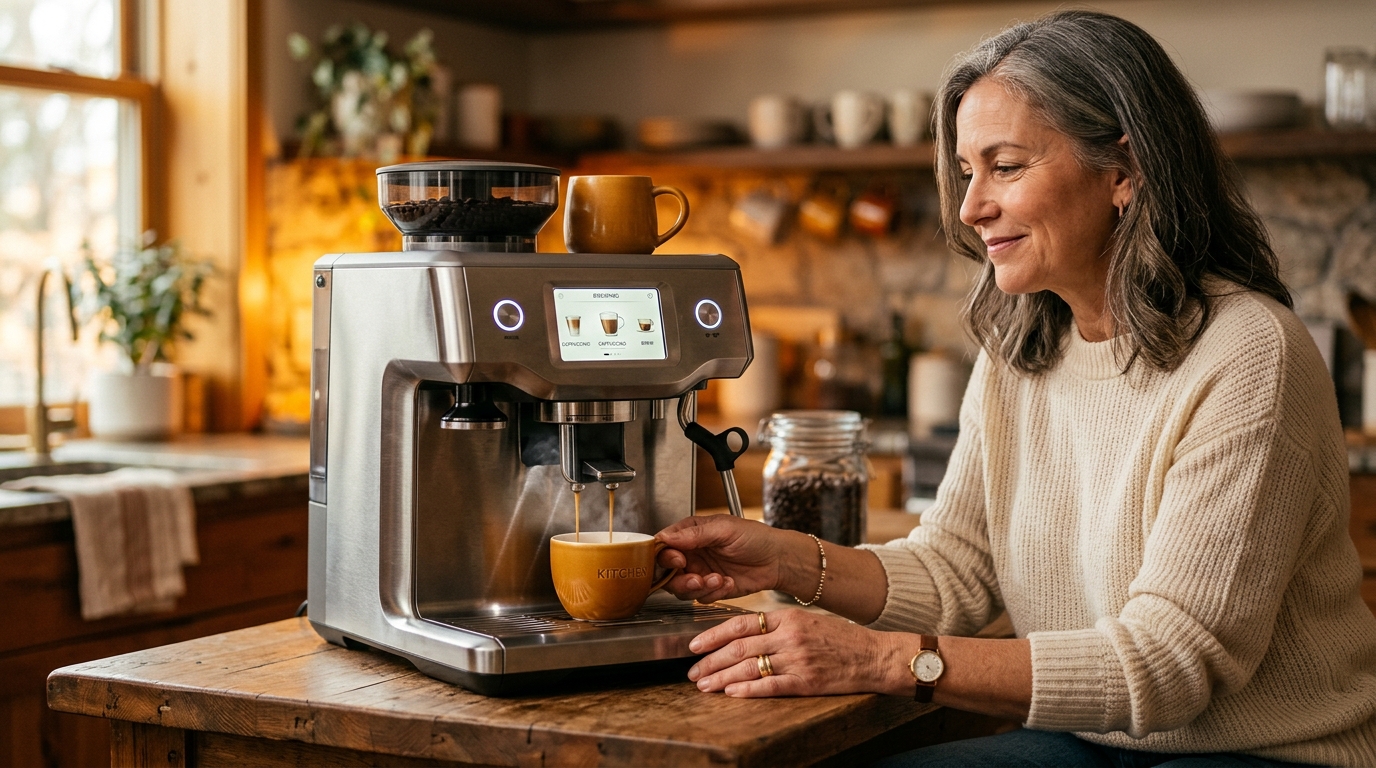
Compare coffee grinders burr models for espresso, drip, and French press. Learn types, features, cleaning, and buying tips for richer coffee at home daily.
Great coffee starts before the water ever reaches your brewer. While premium beans and a reliable coffee maker matter, unevenly ground coffee can make even excellent beans taste sour, bitter, weak, or muddy. That is why coffee grinders burr models are a worthwhile upgrade for anyone who wants more control over flavor at home. Unlike blade grinders, which chop beans into irregular pieces, burr grinders crush beans between precisely shaped surfaces for a more consistent coffee grind size. The result is better extraction, clearer flavor, and a cup that is easier to repeat every morning. Whether you make espresso, pour-over, drip coffee, French press, or cold brew, the right burr grinder can improve your routine dramatically. This guide explains burr types, grind settings, key features, maintenance, and how to choose a grinder that fits your brewing method, counter space, budget, and coffee goals.
Why Coffee Grinders Burr Models Make a Noticeable Difference
A burr grinder uses two abrasive surfaces called burrs to mill coffee beans into particles of a selected size. One burr remains fixed while the other rotates, creating a controlled gap that determines how fine or coarse the grounds become. This approach is far more consistent than the spinning blades found in inexpensive choppers.
Consistency matters because water extracts flavor from small particles faster than from large ones. If a grinder produces a mix of powder-like fines and oversized chunks, the fines can over-extract and taste bitter while the chunks under-extract and taste sharp or thin. A quality burr coffee grinder narrows that particle range, helping your brewer produce a sweeter, fuller, and more balanced cup.
Burr grinders also give you repeatable settings. You can use a fine setting for espresso, a medium setting for automatic drip, a medium-coarse setting for pour-over, and a coarse setting for French press or cold brew. Once you find a setting that works, you can return to it instead of guessing each time. For most home coffee drinkers, this repeatability is the biggest reason to move beyond a blade grinder.
Affiliate disclosure: As an Amazon Associate, this site may earn from qualifying purchases. Product availability, specifications, and prices can change, so always review the current listing before buying.
Conical vs. Flat Burrs: Which Burr Grinder Is Best?
The two main burr styles are conical and flat. A conical burr grinder uses a cone-shaped inner burr that sits inside an outer ring burr. Beans travel downward through the burr set as they are ground. Conical burrs are common in home grinders because they are generally compact, efficient, relatively quiet, and good at handling a broad range of brew methods.
A flat burr grinder uses two parallel discs with sharp cutting surfaces. Beans pass between the discs and exit at the selected grind size. Flat burr grinders are often favored by serious espresso users because they can deliver highly uniform particles and excellent clarity. However, many flat-burr models are larger, louder, and more expensive than entry-level conical designs.
Neither style automatically makes better coffee in every kitchen. The burr geometry, motor, alignment, grind adjustment system, and overall build quality all matter. For drip coffee, pour-over, and French press, a dependable conical model is often an excellent value. For espresso enthusiasts who enjoy dialing in several coffees and pursuing precise shots, a well-designed flat-burr model may justify the investment.
Also consider burr material. Stainless steel burrs are sharp, durable, and widely used. Ceramic burrs resist heat and corrosion but can be more brittle if a small stone slips through the beans. For most households, stainless steel offers the most practical balance of performance and durability.
Match Coffee Grind Size to Your Brewing Method
The best grinder is one that reaches the grind range your favorite brewer needs. Espresso requires very fine, closely controlled grounds because water contacts coffee for a short time under pressure. A capable espresso grinder should offer many small adjustments near the fine end of its range; broad steps can make it difficult to dial in a shot.
For automatic drip machines, medium grounds are usually ideal. The texture should resemble sand, although the exact setting varies with the coffee maker and filter type. Pour-over brewing commonly uses medium-fine to medium-coarse grounds depending on the dripper, recipe, and pour speed. French press and cold brew typically need a coarse setting to reduce sediment and slow extraction.
Do not rely solely on setting numbers printed on a grinder. A setting marked 15 on one machine may be dramatically different from 15 on another. Start in the manufacturer’s suggested range, taste the coffee, and make one small adjustment at a time. If coffee tastes sour, hollow, or finishes too quickly, grind a little finer. If it tastes harsh, dry, or bitter, grind a little coarser.
For people who regularly make multiple styles of coffee, look for a model with a clear adjustment collar or digital settings that are easy to revisit. Stepped grinders provide defined clicks and are simple to repeat. Stepless grinders provide virtually continuous control, which is useful for espresso but may require more patience.
Features to Compare Before You Buy a Burr Coffee Grinder
Start with capacity and workflow. A hopper-fed machine stores beans on top and is convenient for daily use, but it can retain beans between sessions. A single-dose grinder is designed for weighing each serving of beans before grinding, making it easier to switch coffees and reduce stale leftovers. If you buy one bag at a time and brew the same coffee daily, a hopper may be more convenient. If you rotate between decaf, espresso, and filter beans, single dosing can be more flexible.
Next, evaluate retention, static, and mess. Some grounds remain inside every grinder after use. Low-retention designs leave fewer old grounds behind, which is especially helpful when changing beans. An anti-static feature, dosing cup, or well-designed chute can also keep fine coffee dust off your counter.
For espresso, prioritize adjustment precision, portafilter compatibility, and consistent dosing. The Baratza Encore ESP, for example, is frequently considered by home users who want a more approachable grinder with espresso-focused settings alongside filter-coffee capability. Compare its current specifications with your machine and brewing habits, then use the product listing to check the price and included accessories.
Noise level, footprint, cleaning access, and replacement parts deserve attention as well. A grinder that is easy to brush out and maintain is more likely to deliver dependable coffee for years. If your kitchen is small, measure cabinet clearance before choosing a tall hopper model.
How to Clean and Maintain Coffee Grinders Burr Sets
Fresh coffee oils gradually coat burrs and internal passages. Over time, these oils can become stale and affect flavor, while accumulated grounds can cause clogs or inconsistent dosing. Routine care protects your investment and keeps every cup tasting cleaner.
For weekly maintenance, unplug the grinder, empty the hopper, and use a soft grinder brush to remove loose grounds from the burr chamber and chute. If the manufacturer permits it, remove the upper burr for better access. Avoid washing steel burrs with water unless the instruction manual specifically says it is safe; moisture can lead to corrosion and trapped coffee residue.
Every few weeks or after finishing a bag of oily dark-roast beans, use grinder-cleaning tablets that are made for coffee equipment, following the package and manufacturer instructions. Then grind a small amount of coffee to clear any remaining tablet material. Wipe the hopper and grounds bin with a dry or lightly damp cloth, making sure they are completely dry before reassembly.
Use good-quality whole beans and inspect them before filling the hopper. Tiny stones or debris can damage burrs. When your grinder begins to produce noticeably less consistent grounds despite cleaning, check whether its burrs are worn or need realignment. Many reputable brands sell replacement burr sets, extending the useful life of a well-built machine.
FAQ
- Are burr grinders really better than blade grinders?
- Yes, for most coffee drinkers. A burr grinder creates more uniform grounds and allows you to select a repeatable grind size. That improves extraction and makes it easier to brew balanced coffee. Blade grinders can work for occasional use, but their uneven particles make consistent results harder to achieve.
- Can one burr grinder handle espresso and French press?
- Many models can handle both, but not all do both equally well. Look for a grinder with a wide grind range and fine, precise adjustments near the espresso settings. If espresso is your main drink, choose an espresso-capable model first; French press is less demanding and usually easy to accommodate.
- Should I choose a conical burr grinder or flat burr grinder?
- Choose based on your priorities rather than burr shape alone. A conical burr grinder is often compact, versatile, and a strong choice for home brewing. A flat burr grinder may offer greater uniformity for demanding espresso workflows, but it can cost more and take up more space.
- How often should I clean a burr coffee grinder?
- Brush out loose grounds about once a week if you use the grinder daily. Perform a deeper cleaning every few weeks, especially when using dark or oily beans. Always follow the manufacturer’s care guidance before removing burrs or using cleaning tablets.
Conclusion
Choosing among coffee grinders burr options becomes easier when you begin with the coffee you actually brew. For everyday drip, pour-over, and French press, a durable conical model with a useful range of settings can bring a major improvement in flavor and consistency. For espresso, invest in finer adjustment control and a workflow that makes dialing in beans less frustrating. Focus on burr quality, grind range, retention, cleaning access, capacity, and the space available in your kitchen rather than chasing the highest price alone. Remember that fresh beans, accurate doses, and a clean grinder work together to produce better results. Read current customer feedback, compare specifications, and confirm that the grinder supports your preferred brew method. When you have narrowed down the right fit, visit the Amazon product page, review the latest details, and check the price before making your decision.
— Enjoyed this? Pass it on
— Want to build your own?
Publish articles like this in 90 seconds.
The whole terminal — AI writer, PA-API sync, refresh radar, auto-tweets — free for the first 3 articles.
Try for free