— amazon · Kitchen
Best Coffee Grinders Burr Guide: Choose the Right Grind
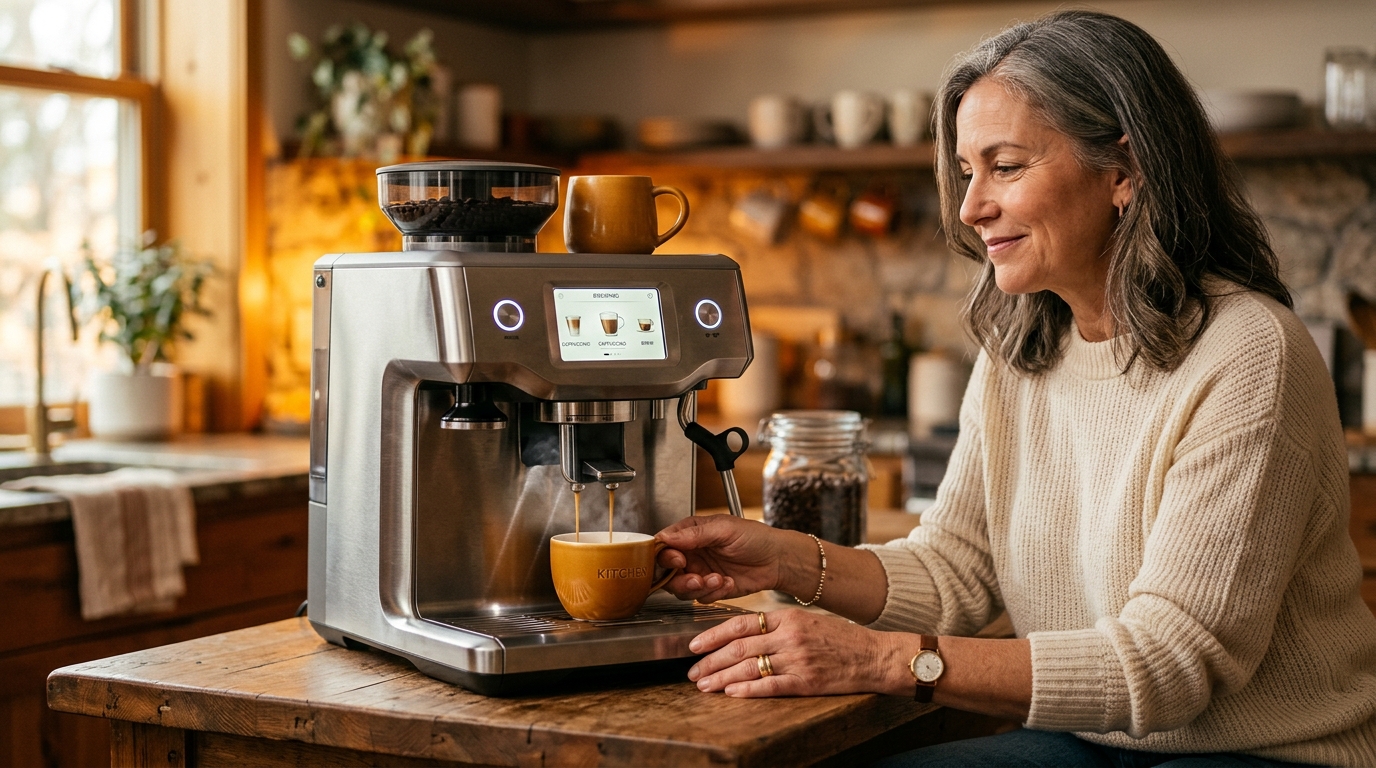
Discover the best coffee grinders burr options for fresher coffee. Compare burr types, grind settings, features, and buying tips for every brew method at home.
Great coffee starts before the water ever touches the grounds. Whole beans hold onto aromatic oils and flavor compounds far longer than pre-ground coffee, but only if you can grind them consistently just before brewing. That is why coffee grinders burr models are one of the most worthwhile upgrades for a home kitchen. Unlike blade grinders, which chop beans into uneven pieces, burrs crush beans between two precisely spaced surfaces for more uniform grounds. The result is cleaner flavor, better extraction, and a brew that is easier to repeat every morning. Whether you make espresso, pour-over, French press, cold brew, or drip coffee, the right grinder can make your favorite beans taste noticeably better. This guide explains the differences between burr styles, key features to compare, and how to choose a grinder that fits your budget and brewing habits. As an Amazon Associate, we may earn from qualifying purchases.
Why Coffee Grinders Burr Models Make Better Coffee
A burr grinder works by feeding coffee beans between two abrasive burrs. One burr remains stationary while the other rotates, and the space between them determines the final particle size. This controlled crushing action produces grounds that are far more consistent than those from a spinning blade grinder.
Uniformity matters because coffee extracts at different speeds. Tiny particles, often called fines, can over-extract and taste bitter. Large chunks may under-extract and leave the cup sour, weak, or watery. When your grounds are closer in size, water flows through the coffee more predictably and pulls a more balanced range of sweetness, acidity, and body from the beans.
Most coffee grinders burr designs also offer adjustable settings. You can use a coarse grind for French press, a medium setting for automatic drip machines, a medium-fine setting for pour-over, and a fine setting for espresso. This flexibility is especially valuable if your household uses more than one brew method.
For shoppers replacing a basic chopper, an electric burr grinder is often the easiest daily upgrade. It saves time, offers repeatable settings, and can improve consistency without requiring advanced barista skills. A quality grinder may even have a greater effect on flavor than upgrading to a more expensive coffee maker.
Conical Burr vs. Flat Burr: What Is the Difference?
The two main burr geometries are conical and flat. Neither style is automatically best for every person; the better choice depends on your brewing routine, taste preferences, countertop space, and budget.
A conical burr grinder uses a cone-shaped inner burr surrounded by a ring-shaped outer burr. Beans travel downward through the burr set as they are ground. Conical models are common in home kitchens because they are typically quieter, create less heat at moderate speeds, and work well across a broad range of grind sizes. They are a practical choice for drip coffee, pour-over, French press, and many entry-level espresso setups.
A flat burr grinder uses two parallel, disk-shaped burrs. Beans pass between the flat surfaces before exiting through the selected gap. Flat burrs are often valued for high consistency and clarity in the cup, especially at espresso and filter settings. However, they can be louder, may retain more grounds, and are frequently found in larger or more premium machines.
Burr material is another consideration. stainless steel burrs are durable, widely available, and usually more affordable. Ceramic burrs stay sharp for a long time and generate little heat, but they can be more brittle if a hard foreign object reaches the grinding chamber. For most home users, stainless steel burrs offer an excellent balance of durability, performance, and value.
Choose Coffee Grind Settings for Your Brew Method
The best grinder is one that can reliably reach the range your preferred brewer needs. A wide adjustment range sounds appealing, but usable, repeatable steps in your everyday range matter more than a long list of settings.
- Extra-coarse to coarse: Best for cold brew and French press. Large particles slow extraction and reduce the amount of sediment that passes through a metal filter.
- Medium-coarse: A useful starting point for Chemex-style brewers and some immersion-drip hybrids.
- Medium: Ideal for many automatic drip machines and flat-bottom filter brewers.
- Medium-fine: Common for cone-shaped pour-over brewers, including V60-style drippers.
- Fine: Used for espresso and stovetop moka pots, though espresso usually requires very small, precise changes.
Espresso is the most demanding application because small differences in grind size can dramatically change shot time and flavor. If espresso is your priority, look for a grinder with stepless adjustment or many micro-adjustments. A model designed only for coarse brewing may technically grind fine enough, but it may not give you the precision required to dial in espresso.
For drip and pour-over, prioritize easy adjustment and a grinder that returns to your preferred setting reliably. For French press and cold brew, a modestly priced manual or electric burr grinder can perform very well because those methods are more forgiving of small particle variations.
Features to Compare Before Buying a Burr Grinder
Start with capacity. Small hopper grinders suit one or two daily drinkers and encourage you to keep beans fresher. Larger hoppers are convenient for busy households, but beans exposed to air for days can gradually lose aroma. If you enjoy changing coffees frequently, a single-dose design may be more convenient than a large hopper.
Next, consider retention: the amount of ground coffee left inside the chute after grinding. Low-retention grinders waste fewer beans and make it easier to switch between regular and decaf coffee. Static control is useful as well, since dry conditions can cause grounds to cling to plastic bins and create countertop messes.
Look for an easy-to-read adjustment collar or dial, a removable grounds container, and parts that can be brushed clean. Timed dosing is convenient for repeatable drip coffee, while weight-based dosing is especially useful for users who want precise portions. Noise level may matter in apartments or early-morning households, and a compact footprint can be important in smaller kitchens.
Do not choose solely by the highest number of advertised settings. Build quality, burr alignment, accessible cleaning, and reliable customer support often matter more in daily use. Before purchasing through Amazon, check the price, read recent customer feedback, and confirm that the grinder's capabilities match your brewing equipment rather than its marketing claims.
Manual and Electric Burr Grinders for Every Kitchen
A manual burr grinder is compact, quiet, portable, and often delivers impressive grind quality for the cost. It is an excellent option for travel, camping, small kitchens, and occasional coffee drinkers. The trade-off is effort: grinding enough coffee for a full pot can take time, particularly at finer settings.
An electric burr grinder is better for speed and convenience. It is usually the right choice for families, frequent coffee drinkers, or anyone making several cups each day. Entry-level electric grinders work well for drip, French press, and pour-over. Mid-range models generally provide more even grounds, sturdier components, and better adjustment control. Premium grinders may add low-retention designs, quieter motors, more precise espresso adjustment, and improved workflow features.
When comparing options on Amazon, focus on your real routine. A simple conical burr grinder may be the smartest value if you brew a daily pot of drip coffee. A more adjustable flat burr grinder can be worthwhile for dedicated espresso or pour-over enthusiasts. Avoid paying for advanced features you will not use, but do invest enough to get stable settings and dependable burr performance.
Once you identify a suitable model, check the price, compare included accessories, and review the return policy. Prices and availability can change, so a quick comparison helps you make a more confident purchase.
How to Maintain Your Burr Grinder
Regular maintenance protects flavor and helps your grinder perform consistently. Coffee oils and fine particles build up inside the burr chamber over time. These residues can become stale and make fresh coffee taste dull, especially when you switch to lighter or more delicate beans.
Empty the hopper before cleaning, unplug electric models, and follow the manufacturer's instructions for removing the hopper and upper burr. Use a soft grinder brush to remove loose grounds from the burrs, chute, and grounds bin. Do not rinse steel burrs or electrical components unless the manufacturer specifically says they are washable. Moisture can cause corrosion or damage the grinder.
For most homes, brushing every one to two weeks and doing a deeper cleaning monthly is a sensible routine. Grinder-cleaning tablets can help remove oil buildup in compatible machines. Also inspect beans before loading them: small stones or other hard debris can chip burrs. With clean burrs and fresh beans, even a modest burr grinder can produce better-tasting coffee for years.
FAQ
- Are burr grinders really better than blade grinders?
- Yes. Burr grinders create more even particle sizes, which supports more balanced extraction and better flavor. Blade grinders can work for casual use, but their uneven grounds make it harder to brew consistently.
- Is a conical burr grinder good for espresso?
- Many conical burr grinder models can make excellent espresso, provided they have fine enough adjustments. For serious espresso, choose one with micro-adjustments or stepless control so you can fine-tune shot timing.
- How often should I clean stainless steel burrs?
- Brush stainless steel burrs every one to two weeks if you grind daily, then perform a deeper cleaning about once a month. Clean more often when using oily dark-roast beans or switching between coffees.
- What is the best burr grinder for drip coffee?
- The best option is typically an electric burr grinder with consistent medium settings, simple adjustment, and a capacity that matches your daily batch size. You do not need espresso-level precision for most drip coffee makers.
Conclusion
Choosing among coffee grinders burr options is ultimately about matching the grinder to the way you brew. A reliable conical burr grinder is a strong all-around choice for most homes, offering straightforward operation and useful versatility for drip, pour-over, French press, and occasional espresso. If you prioritize clarity and highly precise adjustments, a flat burr grinder may justify the added cost and countertop space. Focus on consistent coffee grind settings, durable burr material, easy cleaning, and a workflow you will enjoy using every day. Remember that fresh beans and a clean grinder are just as important as the machine itself. Ready to improve your morning cup? Compare the models that fit your brew method, check the price on Amazon, and choose a grinder that makes fresh, flavorful coffee easy to repeat.
— Enjoyed this? Pass it on
— Want to build your own?
Publish articles like this in 90 seconds.
The whole terminal — AI writer, PA-API sync, refresh radar, auto-tweets — free for the first 3 articles.
Try for free