— amazon · Fitness
Resistance Bands Home Gym: Build Strength in Any Space
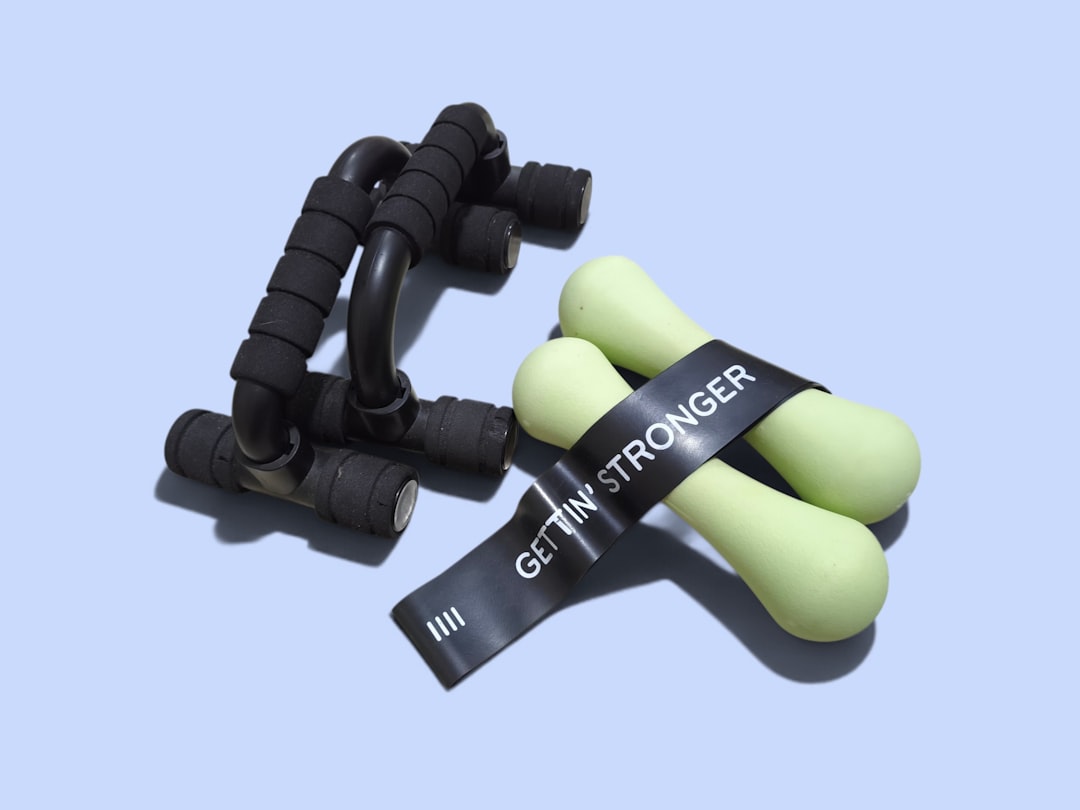
Build a resistance bands home gym with smart band types, workouts, safety tips, and Amazon buying advice for effective full-body training at home today.
A resistance bands home gym is one of the simplest ways to train consistently without dedicating a room to bulky machines, racks, or stacks of weights. A few well-chosen bands can support strength training, mobility work, rehabilitation-style movements, warm-ups, and high-rep conditioning sessions in a small apartment, spare bedroom, garage, or while traveling. Unlike fixed dumbbells, bands create increasing tension as they stretch, giving many exercises a challenging finish and allowing you to adjust difficulty with band thickness, leverage, tempo, and range of motion. The best setup is not necessarily the largest collection of accessories. It is a practical system with bands you can use safely for rows, presses, squats, hinges, pulls, and core training. This guide explains what to buy, how to organize your space, and how to create effective full-body resistance band exercises that fit your goals, budget, and schedule.
Why Build a Resistance Bands Home Gym?
Resistance bands make home training accessible because they are compact, relatively affordable, and adaptable for beginners through advanced lifters. You can store an entire collection in a drawer or small tote, yet still perform movement patterns that train your chest, back, shoulders, arms, legs, and core. This is especially useful when space, noise, or budget makes traditional home gym equipment impractical.
Bands also provide variable resistance: tension generally rises as the band gets longer. That can make the top of a row, press, squat, or curl feel particularly demanding. By adjusting your stance, using a longer range of motion, slowing the lowering phase, or combining bands, you can continue progressing without immediately buying heavier equipment.
A resistance bands home gym works best when you view bands as a complete training tool rather than a backup for weights. They are excellent for assisted pull-ups, glute activation, shoulder-prehab drills, and high-quality strength sessions. They may be less convenient than barbells for measuring absolute load precisely, but they are outstanding for building muscle endurance, improving control, and maintaining a regular routine. For many people, consistency and smart exercise selection matter far more than owning a large collection of gear.
Choose the Right Bands and Essential Accessories
Most home setups benefit from two main styles. loop resistance bands are continuous flat loops available in light mini-band sizes through thick power-band sizes. Small loops work well for lateral walks, glute bridges, and shoulder activation. Larger power loops can add resistance to squats, deadlifts, presses, and rows, or provide assistance for pull-ups.
tube resistance bands usually have handles and may come with interchangeable resistance levels. They feel intuitive for curls, presses, flyes, and rows because the handles resemble cable-machine grips. A quality resistance band set with several resistance options is more versatile than buying one heavy band, since different exercises and muscle groups need different tension levels.
Useful accessories include a sturdy door anchor, ankle straps, handles, and a secure training mat. A door anchor expands your exercise library dramatically by creating high, middle, and low attachment points for pulldowns, chest presses, face pulls, rows, and leg curls. If you add one, choose a model with dense padding and a strong stitched loop. Never use an anchor on a damaged door, loose frame, glass door, or a door that opens toward you.
Before purchasing, review the listed resistance range, material, handle construction, connection points, and customer feedback about durability. Latex bands can have a strong smell when new and may not suit people with latex sensitivities, so check product materials carefully. If you are comparing options on Amazon, use the product listing to confirm what is included rather than assuming handles, anchors, or ankle straps come in every package.
Set Up Your Space for Safe, Versatile Training
You only need enough clear floor space to lie down, step backward, and raise your arms without striking furniture or a ceiling fan. Start with a non-slip surface and place your mat where you have room for squats, floor presses, planks, and hip bridges. Keep bands out of direct sunlight, away from sharp edges, and separate from pets that may chew the material.
For door-based movements, close and lock the door first. Position the anchor on the hinge side whenever possible, because that is typically the strongest side of the frame. Pull the band gently before each set to confirm the anchor is seated and the door cannot move. Stand so that a release would send the band away from your face, not toward it. Eye protection is not usually necessary for ordinary training, but careful setup and regular inspection are essential.
Inspect every band before use. Look for cracks, thinning, frayed fabric, damaged handles, loose clips, or worn stitching. Replace worn equipment rather than trying to repair it with tape. Begin each new exercise with light tension and practice the movement slowly. Band resistance can feel deceptively easy at the start and much harder near the end range, so keep your joints controlled and avoid snapping back to the starting position.
A simple organization system helps you train more often. Store bands by resistance level in a labeled bag, hang the anchor and handles together, and keep a written workout nearby. Reducing setup friction is one of the most valuable benefits of a compact resistance bands home gym.
A Full-Body Resistance Band Workout for Home
Train two to four days per week, leaving at least one rest day between challenging full-body sessions when needed. Choose a band that lets you finish each set with one to three repetitions still in reserve while maintaining clean form. Complete two or three rounds of the following routine, resting 45 to 90 seconds between exercises.
- Banded squat: Stand on a loop band and hold the top near your shoulders, or use handles. Sit down under control, keep your feet planted, then stand tall. Perform 8 to 15 repetitions.
- Standing chest press: Anchor the band at chest height behind you. Press forward without flaring your ribs or locking your shoulders upward. Perform 10 to 15 repetitions.
- Seated or standing row: Anchor at mid-torso height, pull elbows toward your hips, and pause briefly as your shoulder blades come together. Perform 10 to 15 repetitions.
- Romanian deadlift: Stand on the band, hinge at the hips, and keep a long neutral spine as you stand. Focus on hamstrings and glutes for 10 to 15 repetitions.
- Overhead press: Stand on the band and press handles or band ends overhead. Use a lighter band than you expect, especially if shoulder mobility is limited. Perform 8 to 12 repetitions.
- Pallof press: Set the anchor at chest height to your side. Press the handle away from your chest and resist rotation. Perform 8 to 12 controlled repetitions per side.
Progress by adding repetitions, increasing band tension, using a slower three-second lowering phase, shortening your rest period, or adding one set. Do not progress every variable at once. Track the band level, setup distance, repetitions, and perceived effort; this makes resistance band exercises easier to repeat and improve over time.
How to Buy Smartly Through Amazon Associates Links
When choosing products, prioritize safety, useful resistance ranges, and accessories you will actually use. A beginner may do well with light-to-medium bands plus a door anchor, while a stronger user may want thicker power loops for lower-body work and pull-up assistance. Fabric hip bands can be a useful extra for glute work, but they do not replace longer bands needed for presses, rows, and full-body movements.
Look for clear resistance labeling, durable connectors, comfortable handles, and straightforward return policies. Read recent reviews for practical details such as band length, smell, clip durability, and whether the stated resistance seems appropriate. Avoid selecting a set solely because it includes the largest number of pieces. A smaller collection that you can anchor securely and use consistently is usually the better value.
Before making a purchase, check the price, compare included accessories, and verify that the product fits your intended exercises. Product availability and pricing can change. As an Amazon Associate, I earn from qualifying purchases, at no extra cost to you. That relationship does not change the importance of checking product details and choosing equipment that matches your training needs.
FAQ
- Can resistance bands really build muscle at home?
- Yes. Muscle growth depends largely on challenging your muscles with enough tension, useful range of motion, sound technique, and progressive overload. Bands can provide all of these when you use resistance that brings sets close to fatigue and gradually increase repetitions, tension, sets, or time under tension.
- What resistance bands should a beginner buy?
- A beginner should start with a resistance band set that includes multiple light-to-medium levels, plus a door anchor if the home setup allows safe anchoring. Multiple levels are more useful than one heavy band because upper-body presses, rows, squats, and glute exercises all require different amounts of resistance.
- Are loop resistance bands or tube resistance bands better?
- Neither is universally better. Loop resistance bands are highly versatile for lower-body training, mobility, pull-up assistance, and exercises where you stand on the band. Tube resistance bands with handles are often easier for rows, curls, presses, and flyes. Many effective setups include both styles.
- How often should I use a resistance bands home gym?
- Most people can begin with two or three full-body workouts weekly. Allow recovery between demanding sessions and adjust volume based on soreness, fitness level, sleep, and goals. Light mobility or activation work can often be performed more frequently if it does not cause pain or excessive fatigue.
Conclusion
A resistance bands home gym can deliver far more than a quick warm-up. With a few bands, a safe anchor point, and a repeatable plan, you can train every major movement pattern in a small space while avoiding the cost and clutter of large machines. Start with versatile bands, learn the squat, hinge, push, pull, and anti-rotation patterns, then progress gradually by changing tension, repetitions, tempo, or sets. Focus on controlled form rather than chasing the heaviest band immediately, and inspect your equipment regularly for wear. The best home gym is the one you can use consistently, whether you have a dedicated garage or a few feet beside your bed. Review the options that match your training level, check the included accessories, and choose a practical resistance band set that makes your next workout easy to begin.
— Enjoyed this? Pass it on
— Want to build your own?
Publish articles like this in 90 seconds.
The whole terminal — AI writer, PA-API sync, refresh radar, auto-tweets — free for the first 3 articles.
Try for free