— amazon · Fitness
Resistance Bands Home Gym: Build Strength in Any Space
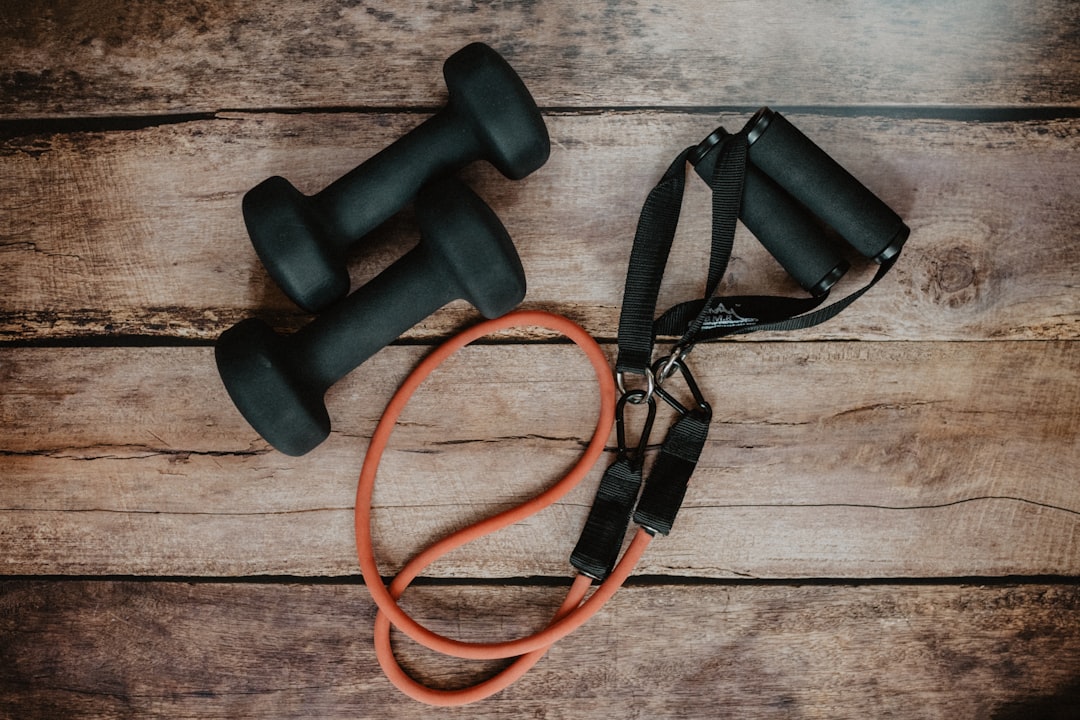
Build a versatile resistance bands home gym with expert buying tips, full-body workout ideas, and the best band types for strength at home today.
A resistance bands home gym makes it possible to train hard without dedicating an entire room to barbells, benches, and bulky machines. Whether you live in an apartment, travel often, or simply want an affordable way to add variety to your workouts, bands can support strength training, mobility work, cardio intervals, and rehabilitation-style movements. Their biggest advantage is progressive tension: resistance increases as the band stretches, challenging muscles through a long range of motion. With a few well-chosen bands, a secure anchor, and a consistent plan, you can train your legs, chest, back, shoulders, arms, and core in a small area. This guide explains the band types worth buying, how to choose safe equipment, and how to create effective full-body workouts. As an Amazon Associate, this site may earn from qualifying purchases at no extra cost to you.
Why Build a Resistance Bands Home Gym?
A resistance bands home gym is one of the most practical forms of home gym equipment because it is compact, portable, and scalable. A complete set can fit in a drawer or travel bag, yet it can create meaningful resistance for presses, rows, squats, hinges, curls, and rotational core work. Bands are also quiet, making them useful for early-morning or apartment workouts where dropping weights is not realistic.
Unlike fixed dumbbells, bands allow you to adjust difficulty by changing the band, moving farther from the anchor point, shortening the working length, or slowing your tempo. This gives beginners a manageable entry point while allowing experienced trainees to use high-rep sets, unilateral exercises, pauses, and combined bands for a demanding session.
Bands should not necessarily replace every free weight forever, especially if your goal is maximal strength. However, they are an excellent standalone solution for general fitness and muscle-building volume. They also work well alongside dumbbells or a pull-up bar, providing useful accessory work and warm-up options. The key is to select quality bands, anchor them correctly, and progress your training deliberately.
Choose the Right Types of Resistance Bands
The best resistance bands for home gym use depend on your training style. A versatile setup usually includes more than one band format rather than a single, lightweight loop.
- Loop resistance bands: Small fabric or latex loops are ideal for glute activation, lateral walks, hip abduction, and mobility drills. Wider, longer power loops can also handle assisted pull-ups, deadlifts, squats, rows, and presses.
- Tube resistance bands: These commonly include handles, a door anchor, and sometimes ankle straps. They are convenient for chest presses, lat pulldowns, face pulls, triceps pressdowns, curls, and standing rows.
- Long flat bands: Often used in physical therapy and Pilates-style training, flat bands are useful for lighter resistance, shoulder stability, and controlled rehabilitation exercises.
- Figure-eight bands: These short bands with built-in handles suit compact upper-body movements but are less versatile than a full tube or long-loop set.
For most people, start with a set of long power loops plus a handled kit with a door anchor. This pairing covers nearly every major movement pattern. Look for clearly labeled resistance levels, durable layering or tubing, comfortable handles, and secure carabiners. A useful resistance band set should offer enough range that the lightest band supports warm-ups while the heaviest band challenges lower-body exercises.
What to Look for Before You Buy
Not every band kit is equally safe or useful. First, choose resistance levels that match your current ability and leave room to progress. Product labels vary widely between brands, so treat stated pound ratings as estimates rather than exact measurements. Review the manufacturer’s size chart and customer feedback for clues about real-world tension and durability.
For tube resistance bands, inspect the connection points between the tube, carabiner, and handle. Reinforced fabric sleeves can offer an added layer of confidence, although all bands require regular inspection. For long loops, choose durable multilayer latex or a well-reviewed fabric design intended for strength training. Avoid using bands with cracks, fraying, thinning, exposed inner material, or damaged clips.
A door anchor should have a thick stopper and soft protective material that will not scrape the door. Always anchor it on the hinged side of a closed door, not the side that can pull open toward you. Test the setup gently before every set. If you want a convenient all-in-one option, browse a full resistance band kit that includes handles, ankle straps, a door anchor, and a storage bag. A mat and stable chair can also expand your exercise choices without taking up much room.
Never stretch a band beyond its intended range or attach it to sharp, rough, or unstable surfaces. Wear eye protection if a particular exercise places a stretched band near your face, and keep children and pets clear of the training area.
A Full-Body Resistance Band Workout for Home
This simple resistance band workout targets the main muscle groups in roughly 35 to 45 minutes. Perform it two or three times weekly on nonconsecutive days. Choose resistance that leaves about one to three good repetitions in reserve at the end of each set. Complete two to four sets per exercise, resting 45 to 90 seconds between sets.
- Banded squat: Stand on a long loop or tube and hold the band at shoulder height. Perform 10 to 20 controlled repetitions. Keep your chest tall and knees tracking over your toes.
- Standing chest press: Anchor a tube band behind you at chest height. Press forward for 8 to 15 repetitions, maintaining a stable rib cage and avoiding shoulder shrugging.
- Seated or standing row: Anchor the band in front of you. Pull elbows toward your ribs for 10 to 20 repetitions and pause briefly when your shoulder blades come together.
- Romanian deadlift: Stand on a long band and hold the ends. Push your hips back, keep a neutral spine, then stand tall by squeezing your glutes. Perform 10 to 15 repetitions.
- Overhead press: Stand on the band and press upward for 8 to 15 repetitions. Use a lighter band if you cannot avoid arching your lower back.
- Pallof press: Set the anchor at chest height to your side. Press the handle straight out and resist rotation for 10 to 15 repetitions per side.
Progress by adding repetitions until you reach the top of the suggested range, then move to a stronger band, combine bands, increase the distance from the anchor, or add a slower lowering phase. Record band color, setup, repetitions, and perceived effort so your training advances instead of becoming random.
How to Get Better Results With Bands
Effective band training comes from good technique and consistent progression, not from simply using the heaviest band available. Start each session with five minutes of light movement: marching, bodyweight squats, shoulder circles, and easy band pull-aparts are enough to raise your temperature. Then perform one or two lighter practice sets before your challenging work sets.
Because resistance rises near the end of the range of motion, control matters. Avoid snapping the band back after a repetition. Use a smooth two- to three-second return phase, maintain tension where appropriate, and stop a set if your form changes significantly. For muscle growth, most people can benefit from working in moderate-to-high repetition ranges and taking sets reasonably close to fatigue.
Train all major patterns over the week: squat, hinge, push, pull, lunge, carry or anti-rotation, and core flexion or extension when appropriate. If your goal is fat loss, pair strength sessions with walking, cycling, or short band circuits while maintaining nutrition habits that support your goal. If your goal is strength, focus on technically sound sets, gradually higher tension, and adequate recovery.
Store bands out of direct sunlight and away from extreme heat. Wipe handles and anchors after sweaty sessions, and check every band before use. With regular maintenance and smart programming, a small collection of bands can deliver a reliable long-term training routine.
FAQ
- Are resistance bands enough for a home gym?
- Yes, resistance bands can be enough for a highly effective home gym when you have multiple resistance levels and a safe anchor. They can train every major muscle group through squats, presses, rows, hinges, lunges, curls, and core exercises. People seeking maximum barbell strength may eventually want heavier equipment, but bands are excellent for general fitness, muscle-building volume, mobility, and travel workouts.
- Which resistance bands should beginners buy?
- Beginners should consider a resistance band set with light, medium, and heavy options, plus handles and a door anchor. Long loop resistance bands are especially versatile for lower-body work and assisted pull-ups, while tube resistance bands make presses, rows, and arm exercises easier to set up. Start lighter than you think, learn proper form, and progress gradually.
- Can resistance bands build muscle?
- Resistance bands can build muscle when exercises are performed with sufficient tension, controlled technique, enough weekly training volume, and progressive overload. Work close to muscular fatigue using a resistance level that makes the final repetitions challenging while still allowing good form. Increase repetitions, band tension, range of motion, or time under tension as your fitness improves.
- How do I safely use a door anchor?
- Place the door anchor on the hinged side of a sturdy, fully closed door so the pulling force helps keep the door shut. Position the stopper on the opposite side, lock the door if possible, and test the band with gentle tension before exercising. Do not use damaged doors, loose hinges, sharp edges, or anchors with visible wear.
Conclusion
A well-planned resistance bands home gym proves that effective strength training does not require a large budget or a dedicated workout room. Start with versatile long loops or tube bands, select several resistance levels, and use a secure door anchor for push, pull, squat, hinge, and core exercises. Focus on controlled repetitions, good form, and measurable progression instead of chasing complicated routines. Over time, adding tension, repetitions, or slower tempos can keep your workouts challenging and productive. Before your next session, inspect your equipment and make sure your anchor point is stable. Ready to create a compact setup that fits your goals and available space? Compare a full resistance band kit, choose the resistance range you can grow into, and check the price before ordering. A few smart pieces of equipment can turn any spare corner into a practical training space.
— Enjoyed this? Pass it on
— Want to build your own?
Publish articles like this in 90 seconds.
The whole terminal — AI writer, PA-API sync, refresh radar, auto-tweets — free for the first 3 articles.
Try for free