— amazon · Fitness
Resistance Bands Home Gym: Build a Stronger Workout Space
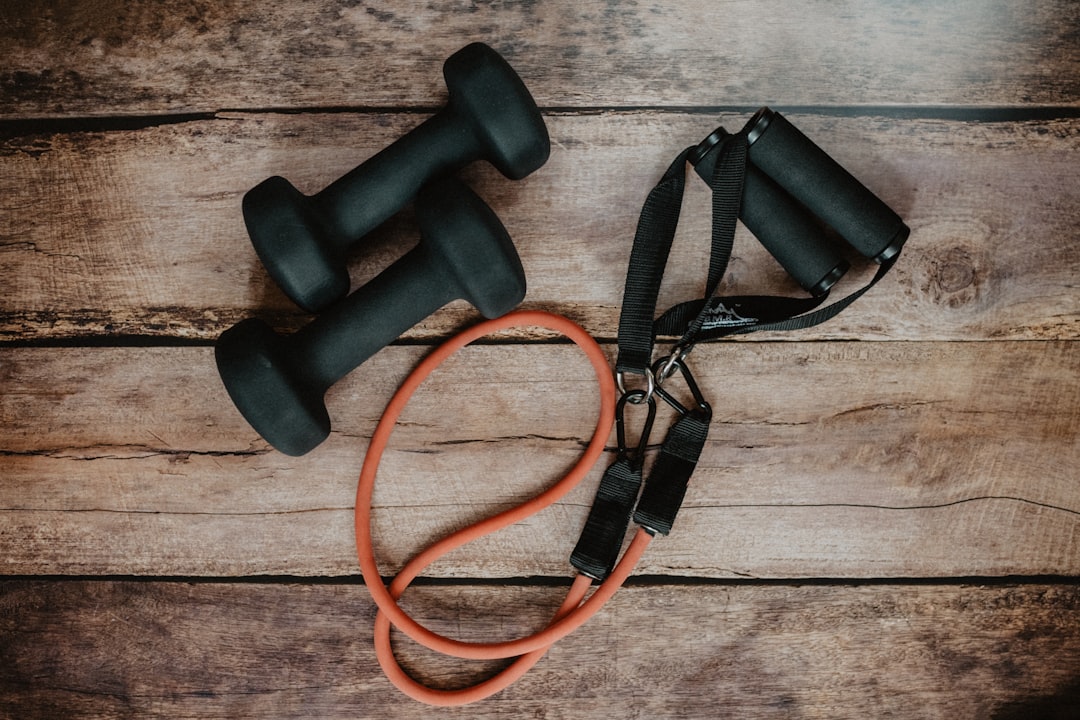
Build a versatile resistance bands home gym with buying tips, workout ideas, and Amazon-ready gear picks for every fitness level at home with confident form.
A resistance bands home gym is one of the smartest ways to train your entire body without filling a spare room with bulky machines. Bands are affordable, portable, adaptable, and effective for beginners, busy professionals, and experienced lifters who want to add variety to their training. With the right setup, you can perform presses, rows, squats, deadlifts, core work, mobility drills, and recovery sessions from a small corner of your home. Unlike fixed-weight equipment, resistance bands create increasing tension as they stretch, which can make many movements feel challenging through the strongest part of the range of motion. The key is choosing durable bands, safe attachments, and resistance levels that match your goals. This guide explains how to build a practical resistance bands home gym, select Amazon-friendly gear, organize your training space, and follow a simple full-body routine that delivers results.
Why a Resistance Bands Home Gym Works
A resistance bands home gym gives you a high-value training solution in very little space. A small collection of bands can replace or supplement many common gym movements, including chest presses, lat pulldowns, seated rows, shoulder presses, curls, triceps extensions, squats, and hip exercises. Because bands weigh almost nothing and fit into a drawer or travel bag, they are especially useful for apartments, shared homes, and people who train while traveling.
The main advantage is progressive tension. As a band lengthens, resistance generally increases, so muscles must continue working hard near the end of a repetition. This can be useful for building muscular endurance, improving control, and adding training volume without loading your joints with heavy weights. Bands also make it easy to adjust an exercise: step farther away from the anchor, use a shorter band length, add another band, or choose a heavier option.
For the best results, treat bands like any other form of resistance training. Use controlled repetitions, maintain consistent form, and gradually make workouts more demanding over time. A quality tube band set can provide enough variation for an effective beginner-to-intermediate full-body program.
Essential Gear for Your Home Band Setup
You do not need dozens of products to get started. Focus on a few versatile pieces that cover pushing, pulling, lower-body training, and safe anchoring. First, choose a set of handled tube bands with several resistance levels. These are convenient for rows, presses, curls, flyes, and overhead movements because the handles create a familiar grip. When comparing options on Amazon, look for stated resistance ranges, reinforced connection points, comfortable handles, and a storage bag.
Next, add a sturdy door anchor. This simple accessory expands your exercise menu dramatically by allowing high, middle, and low attachment positions. It can support movements such as face pulls, chest presses, lat pulldowns, and leg curls. Use it only on a solid, closed door that opens away from you, and place it on the hinged side whenever possible.
Flat fabric loop bands are another useful purchase. They work well for glute bridges, lateral walks, squats, and warm-ups because they tend to stay in place better than thin latex loops. Long loop bands are also valuable for assisted pull-ups, mobility work, and banded deadlifts. Before buying, check the price, compare included accessories, and read recent reviews for information about durability and real-world resistance.
- Handled tube bands: upper-body presses and pulls
- Long loop bands: assisted movements and lower-body strength work
- Fabric loops: glute activation and leg training
- Door anchor: more exercise angles in limited space
- Exercise mat: comfort, traction, and floor protection
How to Set Up Resistance Bands Safely at Home
Safety should come before resistance level. Start by inspecting every band before each workout. Look for cracks, thinning, frayed fabric, damaged stitching, or loose clips. Replace worn bands promptly; a damaged band can snap unexpectedly. Keep bands away from sharp edges, rough concrete, direct sunlight, and excessive heat, all of which can weaken the material over time.
When using a door anchor, close and lock the door before beginning. Test the anchor with gentle tension first, then stand in a position where the door cannot open toward you. Avoid attaching bands to unstable furniture, glass doors, light fixtures, or objects that could shift. For standing exercises, use a non-slip floor or exercise mat and leave enough open space that you will not hit furniture during a repetition.
Band resistance can feel deceptively light at the beginning of a movement and very difficult at the end. Begin with a lighter option until you can complete each exercise with smooth technique. Keep your ribs stacked over your hips, brace your core, and avoid jerking the band. A controlled two-second return phase helps protect your joints while keeping your muscles under tension. If an exercise causes sharp pain, stop and choose a more comfortable variation.
A Full-Body Resistance Band Workout for Home
This simple resistance band workout can be performed two to four times per week on nonconsecutive days. Choose a resistance level that leaves roughly one to three good repetitions in reserve at the end of each set. Rest for 45 to 90 seconds between sets. Complete one lighter warm-up set before your first challenging set for each major movement.
- Banded squat: Stand on a long band and hold the ends at shoulder height. Perform 3 sets of 10 to 15 repetitions. Keep your knees tracking in line with your toes.
- Standing chest press: Set the door anchor at chest height behind you. Press the handles forward for 3 sets of 8 to 15 repetitions. Keep your shoulders down and avoid overextending your lower back.
- Seated or standing row: Anchor the band in front of you at mid-torso height. Pull toward your ribs for 3 sets of 10 to 15 repetitions, squeezing your shoulder blades gently together.
- Romanian deadlift: Stand on the band, hold the ends, and hinge at the hips for 3 sets of 10 to 15 repetitions. Feel the movement in your hamstrings and glutes rather than your lower back.
- Overhead press: Stand on the band and press upward for 2 to 3 sets of 8 to 12 repetitions. Use a lighter band if you cannot keep your ribs down.
- Lateral band walk: Place fabric loop bands above your knees or around your ankles. Take controlled side steps for 2 to 3 rounds of 10 to 15 steps per side.
- Pallof press: Set the anchor at chest height to your side. Press the band straight out and resist rotation for 2 to 3 sets of 10 repetitions per side.
Progress by adding repetitions, slowing the lowering phase, increasing range of motion, shortening the band, or moving to a stronger resistance. Track your sets and resistance choices so your resistance bands home gym continues to challenge you over time.
How to Choose the Best Bands on Amazon
When shopping through Amazon Associates links, prioritize product quality and suitability over the lowest price. The best resistance bands for home workouts are the ones you can use safely and consistently. Check whether the manufacturer clearly identifies the band material, resistance levels, included accessories, and warranty or customer support details. Natural latex bands often provide a smooth stretch, while fabric bands may feel more secure for lower-body exercises. People with latex sensitivities should specifically look for latex-free options.
A bundle is often a practical starting point, but do not assume that more accessories always means better value. A reliable tube band set, a secure door anchor, and a pair of fabric loops can be more useful than a large kit filled with low-quality extras. Review product photos closely for metal carabiners, reinforced handles, thick anchor padding, and clear resistance labeling.
Amazon prices and availability can change, so it is sensible to check the price before purchasing. Disclosure: As an Amazon Associate, this site may earn from qualifying purchases. This does not change your price, and it helps support the creation of useful fitness content. Always follow the manufacturer's instructions and weight recommendations for any product you choose.
FAQ
- Can resistance bands build muscle at home?
- Yes. Resistance bands can support muscle growth when you use enough tension, train close to muscular fatigue, perform consistent weekly sessions, and gradually increase the challenge. Use a combination of heavier bands for compound movements and lighter bands for isolation exercises.
- What resistance bands should beginners buy?
- Beginners should usually start with a multi-level tube band set, a door anchor, and fabric loop bands. Multiple resistance levels make it easier to learn proper form and progress safely as your strength improves.
- Are door anchor exercises safe?
- Door anchor exercises can be safe when the anchor is used on a strong, closed, locked door and tested before each set. Position the anchor on the hinged side when possible, keep the door from opening toward you, and never use damaged bands or unstable attachment points.
- How often should I use a resistance bands home gym?
- Most people can do full-body band training two to four days per week, allowing recovery between harder sessions. You can also use lighter bands more often for mobility, warm-ups, posture work, and low-intensity recovery sessions.
Conclusion
A resistance bands home gym makes consistent strength training more accessible, whether you are working with a small apartment, a limited budget, or a packed schedule. Start with versatile essentials: handled bands, long loops, fabric loop bands, an exercise mat, and a dependable door anchor. From there, focus on foundational movements such as squats, presses, rows, hip hinges, and core exercises. You do not need complicated routines or extreme resistance to make progress. Train with control, track your repetitions, and increase the challenge gradually as your strength and confidence grow. Before adding gear to your cart, compare resistance ranges, materials, attachment quality, and customer feedback to find equipment that fits your needs. Ready to build a compact workout space that you will actually use? Browse a well-reviewed tube band set, check the price, and begin creating a practical home routine today.
— Enjoyed this? Pass it on
— Want to build your own?
Publish articles like this in 90 seconds.
The whole terminal — AI writer, PA-API sync, refresh radar, auto-tweets — free for the first 3 articles.
Try for free